We live in a world that loves labels.
They’re quick. They’re easy. They make us feel like we’ve figured everything out—like we just solved a mystery with a sticky note that says, “Case closed.” So we do it without even thinking sometimes.
“She’s bi-polar.”
“He is autistic.”
“She’s fat.”
“He’s ugly.”
“She’s stupid.”
“She’s ditzy.”
And before you know it, a whole human being gets reduced to a sentence.
Here’s the truth: labels don’t just describe people. They often limit them and God knows how much it hurts to be called names. And the impact can reach far beyond the person doing the labeling and the person being labeled. It reaches into self-worth, relationships, and mental health.
Labels Can Create Shame Faster Than We Realize
Sometimes we say a label like we’re trying to explain what’s going on. But the result is often something deeper than explanation. It’s judgment. It’s distance. It’s an unspoken message that something about a person is unacceptable.
And even when we think we’re being “honest,” what someone hears is often:” You are the problem” or “You are broken.”
That message doesn’t just stay outside the person. It finds a way inside. Into the neural pathways and into the subconscious mind.
A label can become a mirror, and then it becomes a script. Over time, the person begins to believe the label isn’t just a description of their life, it’s a verdict on who they are.
And shame is heavy. Shame makes it harder to hope. Harder to heal. Harder to try. It can steal the energy people need to move forward, especially when they’re already carrying depression, anxiety, or feelings of being misunderstood. And those feelings lead to dysfunctional ways of coping toward themselves and others.
It’s Not That Diagnoses and Differences Don’t Matter
To be clear, names matter. They can help people find support and understand what they’re dealing with. But here’s the difference that matters: a name, or a label, should never replace a person.
A diagnosis isn’t a personality. Autism isn’t a character flaw. Body size isn’t proof of value. Feeling depressed isn’t the same thing as being hopeless forever. And someone’s intelligence, kindness, or potential can’t be measured by a casual comment someone throws out during a conversation.
A label can be a starting point for understanding. But when we use labels as shortcuts for judgment, we stop seeing the full story.
Meet Stephanie Kunkel and the Work of Perspective Shifters
This is where Stephanie Kunkel comes in.
Stephanie is the founder of Perspective Shifters LLC, an organization that helps people see things differently and break out of the social norm of judging others for being different. Her work challenges the reflex we all have to sort people into categories and then decide we “get it” after one sentence.
That’s just too simple, and often it’s wrong. Sometimes the best thing we can do for our world is to get more perspective to understand.
Stephanie’s message is both simple and powerful: when you shift how you see people, your relationships change. And when your relationships change, your whole emotional world changes with it.
She is also my niece and the author of Perspectives Through Broken Glass, a book that is about her own story of trauma, rejection,  depression and recovery. She did another great video with me this week and I am sharing it HERE so you can take a look.
Perspective Shifting Helped Me Write My New Book
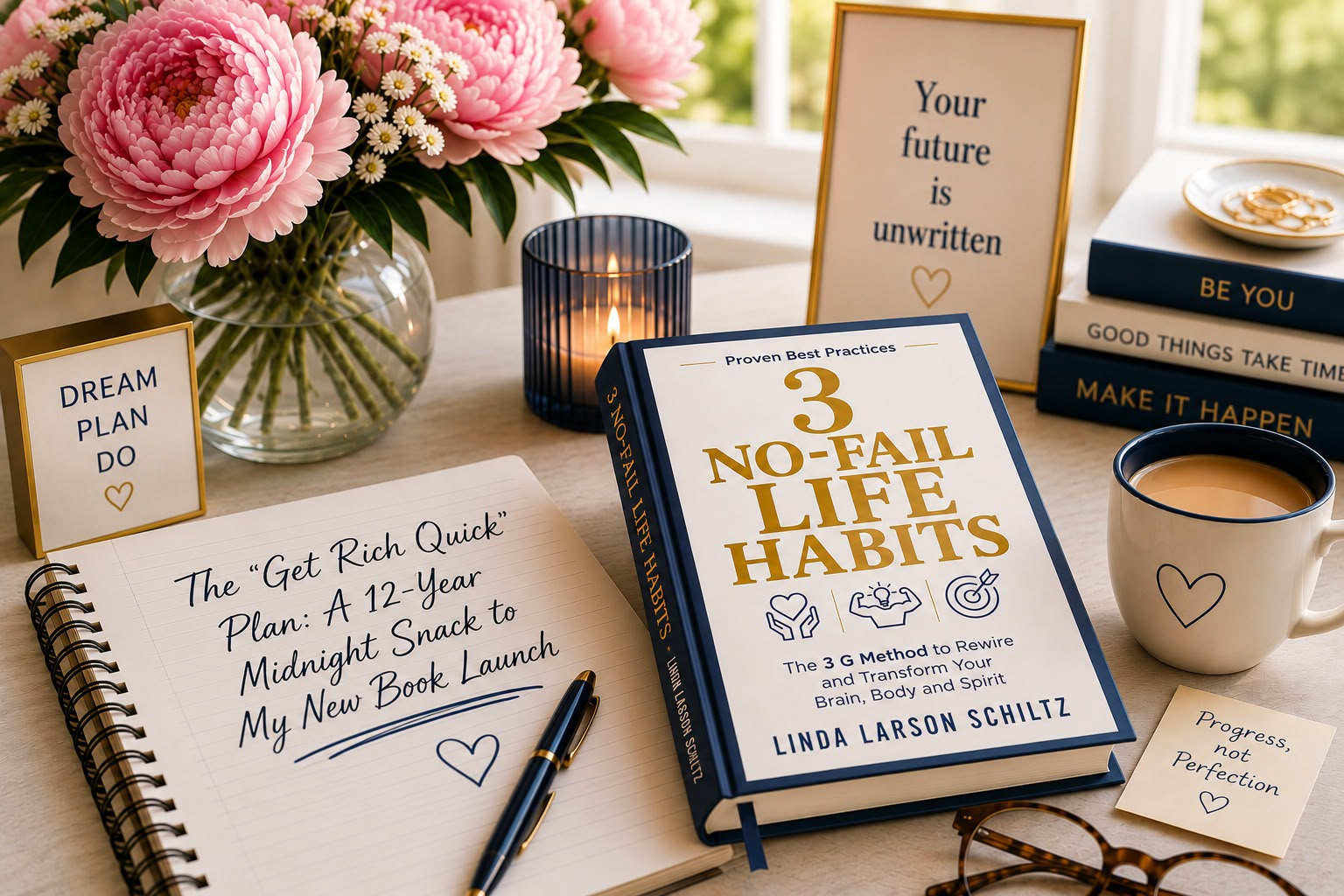
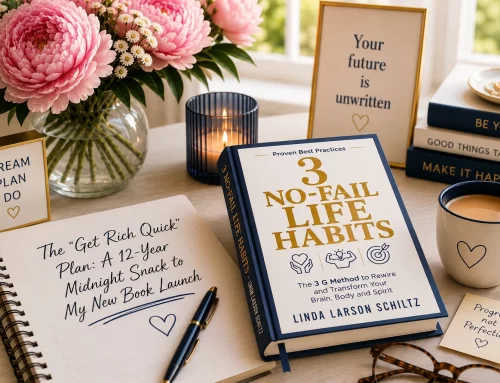
Stephanie is also an amazing coach that helped me get focused on writing my new book 3 No-Fail Life Habit- The 3 G Method to Rewire and Transform Your Brain, Body and Spirit. and did the first review and reorganization of it and has written the following review of it. Check this out
“Linda’s book 3 No Fail Life Habits- The 3 G Method to Rewire and Transform Your Brain, Body and Spirit shares an easy way to improve mental health. As a mental health coach, I read this book and started implementing with clients immediately. I believe it should be something that everyone practices.
Overall, the book is easy to read, informative, rooted in science, and offers Linda’s years of experience in working with clients to improve mental health conditions. It’s well written, funny, and compelling. The habits recommended are simple, to the point, and easy to remember. Even my most neurodivergent high-achievers have benefited from this exercise. I recommend that every mental health practitioner read this book, learn the why behind each point and offer their patients these ideas.”
Stephanie Kunkel MA
Best Selling Author, Corporate Trainer and Owner of Perspective Shifters LLC
The 3G- Method and How it Changes Us
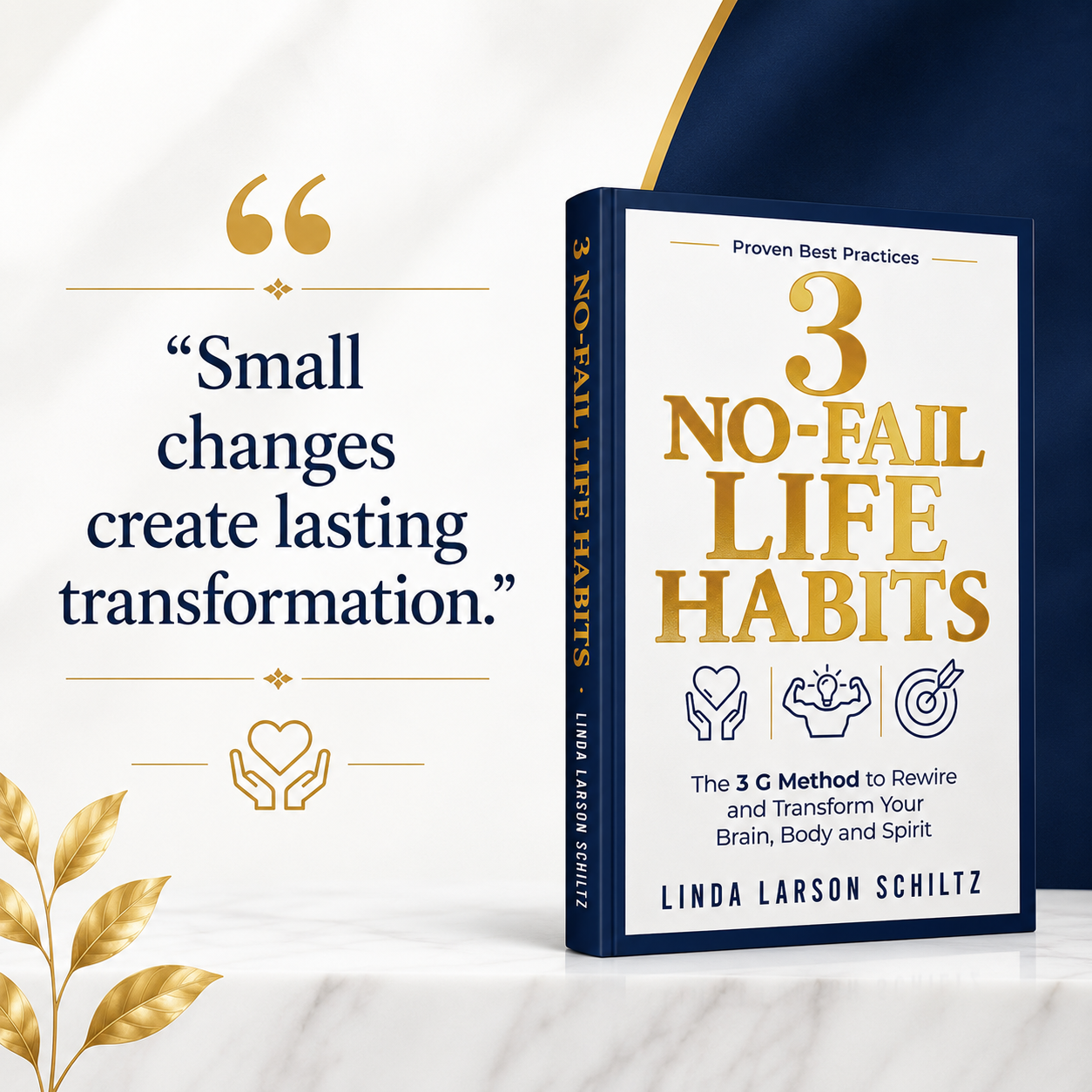 In our live YouTube video, we also talked about the 3G method, a practical way to overcome negative feelings about yourself by focusing on what actually helps you move forward. The idea is not to force yourself to feel good instantly. It’s to train your mind toward hope and direction.
First comes Gratitude. Not because life is suddenly perfect, but because gratitude pulls you out of the “everything is awful” tunnel just long enough to notice that something still exists that matters.
Then comes “Good at.” When people feel shame, they often forget their strengths. The mind starts rewriting the story so that only the mistakes get remembered. Focusing on what you’re good at helps restore reality. It reminds you that you’re not only struggling, you’re also capable.
Finally, goals. Goals give you something to reach for. Even small goals matter because they create forward motion. They turn “I can’t” into “I can try.” And trying is often the beginning of healing.
And when people start moving, even a little, they often discover something important: their feelings don’t control the future as much as they think they do. And when you use the 3 G Method together it changes your brain chemistry in ways you never thought possible.
I have been a counselor for 35 years and I have never had a practice that has helped my clients more than the 3 G’s. When you wake up in the morning and are grateful you have a home to wake up in and a bed to get out of and a shower with hot water and food to eat, it makes a difference.
When you tell yourself you are good at doing a job and you are proud of yourself for working hard and that your Goals for the day are to go to work, do a good job, stay positive and make a difference, you naturally feel better. Use them all together throughout the day and it changes your brain in amazing ways.
A Sober Reminder: Purpose Isn’t a Label
For many people, especially those who have felt judged for years, labels can feel like a cage. But God didn’t create anyone to be reduced to a sentence, a stereotype, or a social assumption.
God created people with purpose. And purpose doesn’t disappear because someone said the wrong thing. Purpose can still be found, strengthened, and lived—through transformation, support, and perspective.
Here’s Your Invitation if Labels Have Hurt You or People You Care About
If labels have hurt you, or if you’ve seen how judgment hurts the people you love, you don’t have to stay stuck in that pattern. You can shift your perspective today by using the 3 G Method.
To learn more about it, go to 3NoFailLifeHabits.com and get the great deal August 12th and 13th with $5 off on Amazon.
Related Posts


Linda is an award-winning Licensed Counselor and Certified NLP and CBT Life Coach specializing in addictions. She is a best-selling author, speaker and corporate trainer